


The Evolution of Actuation: Understanding Hall Effect Longevity
The gaming peripheral industry is currently undergoing a fundamental shift in switch architecture. For decades, the mechanical keyboard market relied on the physical contact of metal leaf springs to complete an electrical circuit. However, the emergence of Hall Effect (HE) technology—based on magnetic sensing rather than physical friction—has introduced a new paradigm for durability and performance. While marketing materials frequently highlight "100-million-click" ratings, tech-savvy enthusiasts often question whether these sensors actually provide a longer functional lifespan in real-world competitive environments.
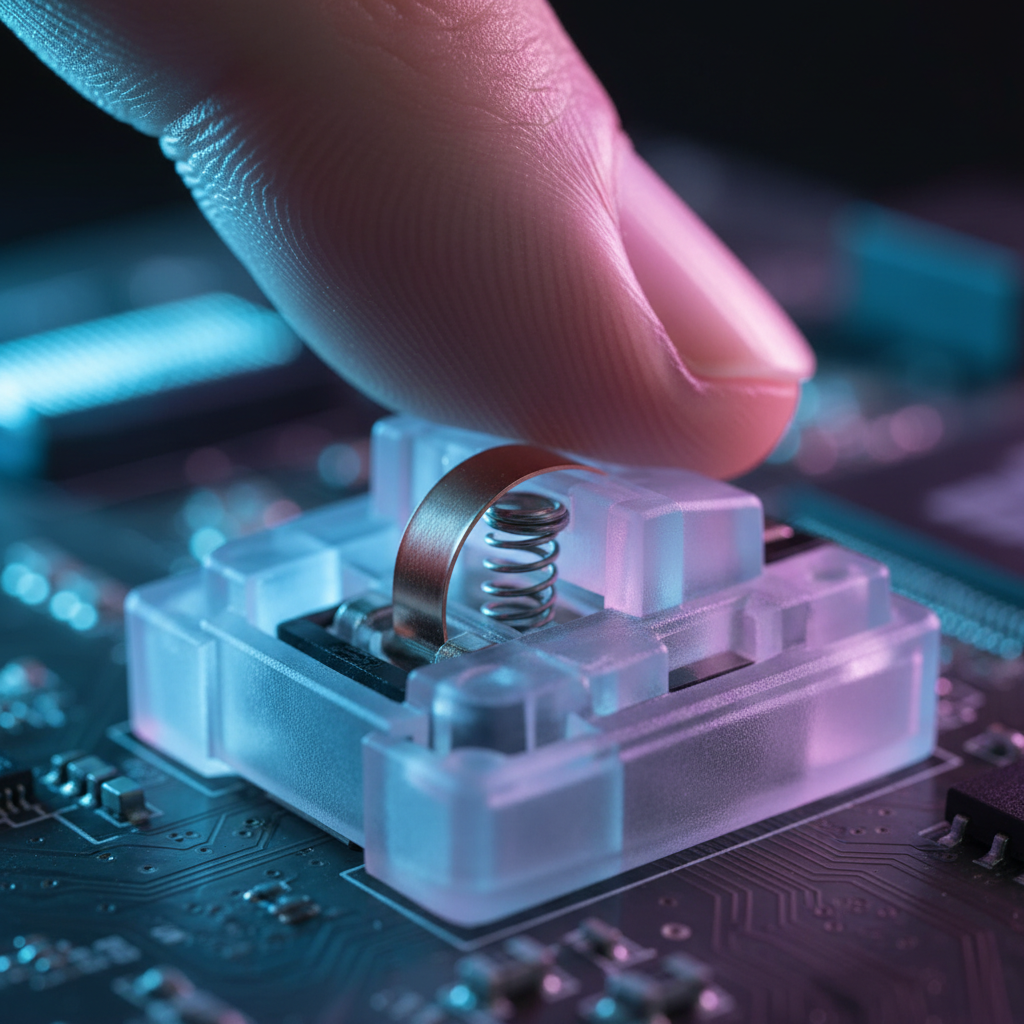
Hall Effect sensors operate on the principle of magnetic flux. As a magnet within the switch stem moves closer to a sensor on the PCB, the change in voltage is measured to determine the precise position of the key. This contactless mechanism theoretically eliminates the primary failure mode of traditional switches: metal fatigue and oxidation. Yet, a keyboard is a complex system of interconnected components, and the sensor is only one link in the reliability chain.
The Physics of Contactless Sensing vs. Mechanical Fatigue
Traditional mechanical switches are limited by the physical properties of their copper alloy leaf springs. Every press involves a microscopic amount of bending, which, over millions of cycles, leads to material degradation, loss of elasticity, and eventual "double-clicking" or failure to actuate.
In contrast, magnetic switches utilize a semiconductor sensor to detect the proximity of a permanent magnet. Because there is no electrical contact point to wear down, the switch mechanism itself is inherently more resilient to repetitive stress. According to technical documentation from manufacturers like Gateron, these magnetic assemblies are designed for adjustable travel and consistent performance over a much wider range of actuations than standard mechanical alternatives.
However, "contactless" does not mean "indestructible." While the switch stem and magnet may survive 100 million cycles, the keyboard's longevity is often dictated by the supporting electronics.
System-Level Failure Modes in Magnetic Keyboards
Expert observations from repair benches and quality control audits suggest that magnetic keyboards face unique challenges. The most common points of failure are not the sensors themselves but the integration of those sensors into the PCB.
- Thermal Stress and Solder Fatigue: Magnetic keyboards often feature dense PCB layouts with high-performance microcontrollers to handle rapid polling rates. The resulting thermal cycles can cause solder joint fatigue, particularly around the Hall Effect ICs.
- Zero-Point Voltage Drift: As noted in reliability studies of Hall current sensors, the semiconductor material can experience voltage drift over time. This can result in inconsistent actuation points, where a key may feel "mushy" or trigger at a different depth than originally calibrated.
- Magnetic Interference: While dust and metal shavings are less problematic for HE sensors than for mechanical contacts, strong external magnetic fields (e.g., from high-powered desktop speakers) can theoretically interfere with sensor calibration if the device is placed in close proximity for extended periods.
Methodology Note: This analysis of failure modes is based on patterns observed in consumer electronics warranty handling and general reliability principles for semiconductor devices, rather than a single longitudinal lab study.
Quantitative Performance: The Rapid Trigger Advantage
For competitive gamers, longevity is intrinsically linked to performance consistency. A switch that lasts 100 million clicks is useless if its latency degrades after the first million. Hall Effect technology enables "Rapid Trigger" (RT) functionality, which allows for near-instantaneous resets and re-actuations.
We modeled a high-intensity competitive gaming scenario to determine the tangible advantage of HE sensors over traditional mechanical switches.
Modeling Note: Rapid Trigger Reset-Time Delta
| Parameter | Value | Unit | Rationale |
|---|---|---|---|
| Travel Time | 5 | ms | Standard key travel for gaming keyboards |
| Mechanical Debounce | 5 | ms | Typical debounce interval to prevent chatter |
| Mechanical Reset Distance | 0.5 | mm | Standard hysteresis for mechanical switches |
| Rapid Trigger Reset Distance | 0.1 | mm | Aggressive HE implementation |
| Finger Lift Velocity | 150 | mm/s | High-intensity competitive movement |
Under these modeling assumptions, the Hall Effect system demonstrates a ~7.7ms latency advantage in reset-time delta. In a competitive title running at 144Hz, this represents a gain of approximately 1.1 frames. For a professional player, this difference determines the speed of counter-strafing and the responsiveness of movement-heavy mechanics.
Logic Summary: This model uses classical kinematics (t = d/v) to compare fixed mechanical hysteresis against dynamic HE reset points. It assumes a constant finger lift velocity and does not account for variable MCU polling jitter.

The Role of 8000Hz Polling in System Reliability
Modern high-end magnetic keyboards often implement an 8000Hz (8K) polling rate to further reduce input lag. While this provides a near-instant 0.125ms polling interval, it places significant stress on the system's hardware and software architecture.
To maintain the reliability of an 8K magnetic keyboard, users must account for several technical constraints:
- CPU Overhead: Processing 8,000 packets per second requires significant Interrupt Request (IRQ) resources. This can impact frame rates in CPU-bound games if the system is not optimized.
- USB Topology: To prevent packet loss and signal degradation, these devices should be connected directly to Rear Motherboard I/O ports. The use of USB hubs or front-panel headers is strongly discouraged due to potential bandwidth limitations and poor shielding.
- Sensor Saturation: To fully utilize the 8K bandwidth, movement-based inputs (like those found in hybrid magnetic mice) require specific DPI settings. For instance, at 1600 DPI, a movement speed of 5 IPS is sufficient to saturate the polling rate, whereas 800 DPI requires 10 IPS.
The Global Gaming Peripherals Industry Whitepaper (2026) emphasizes that as polling rates increase, the "weakest link" in the chain shifts from the switch hardware to the stability of the system's USB controller and OS scheduling.
Environmental Resilience: Dust, Debris, and Maintenance
One of the most significant practical advantages of Hall Effect keyboards is their resilience to environmental contaminants. Traditional mechanical switches rely on the physical cleanliness of the contact points. A single grain of dust or a microscopic layer of oxidation can cause "key chatter" or missed inputs.
Because HE sensors are contactless, they are largely immune to non-magnetic debris. However, metal shavings or magnetic dust can accumulate in the switch housing, potentially affecting the magnetic field.
Recommended Maintenance Schedule for HE Keyboards
| Frequency | Action | Target |
|---|---|---|
| Daily | Compressed air blast | Remove surface dust/debris |
| Weekly | Visual switch inspection | Check for stem wobble or looseness |
| Monthly | Firmware & Calibration | Correct for zero-point voltage drift |
| Quarterly | Deep cleaning | Isopropyl alcohol on non-sensor surfaces |
Regular firmware updates are critical for long-term reliability. Unlike mechanical keyboards, where the hardware is static, HE keyboards rely on sophisticated algorithms to interpret sensor data. Manufacturers often release updates that include recalibration routines to compensate for minor sensor drift or environmental changes.

Ergonomics and Accessory Synergy
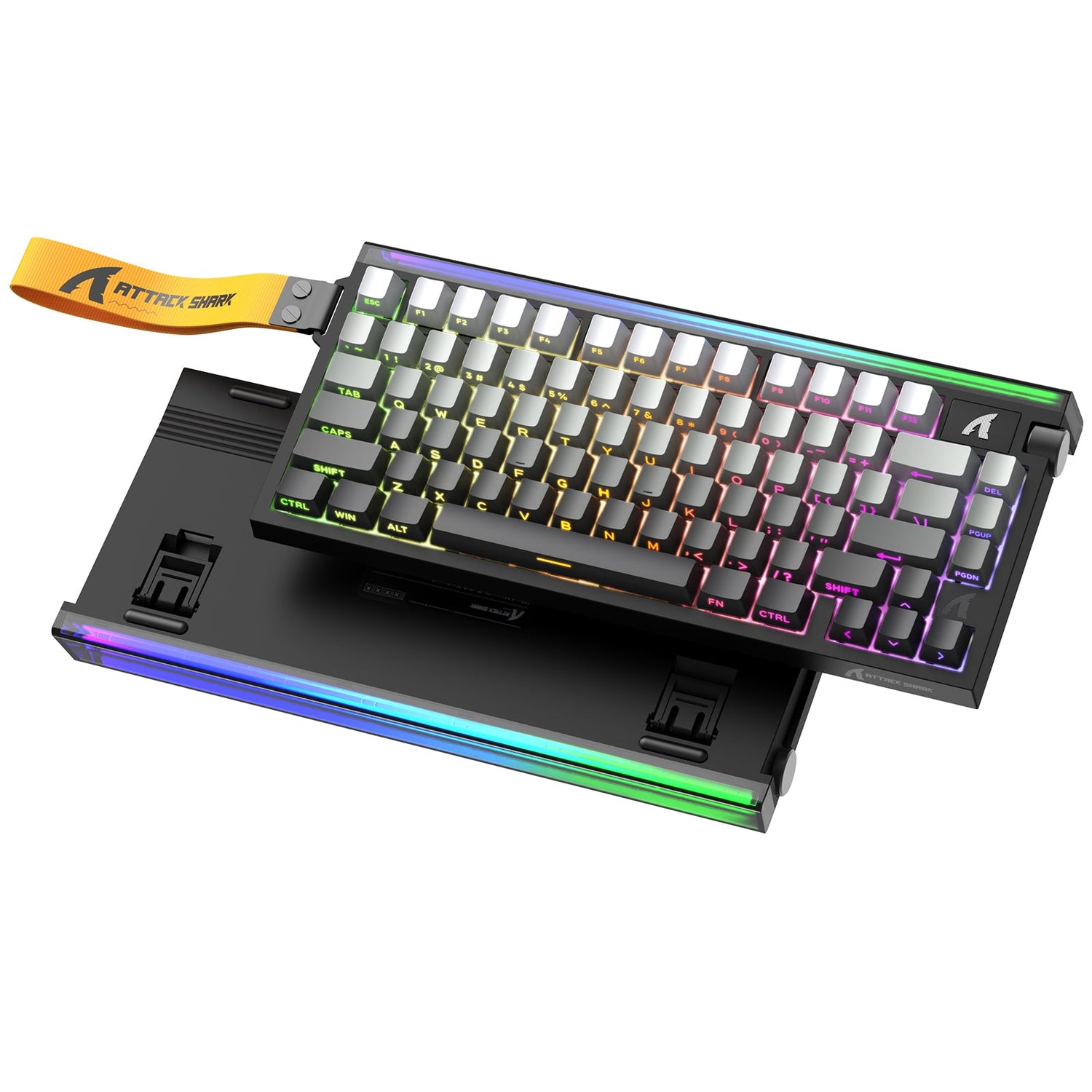
Longevity is not just about the hardware; it is also about the user's ability to operate the hardware without fatigue over long sessions. High-spec magnetic keyboards, such as the ATTACK SHARK R85 HE Rapid Trigger Keyboard, are often designed with compact layouts to maximize desk space for mouse movement.
To complement these setups, ergonomic accessories play a vital role in the overall "system" longevity. An ATTACK SHARK Black Acrylic Wrist Rest provides the necessary elevation to maintain a neutral wrist position, reducing the physical strain that can lead to repetitive stress injuries. For those using 65% or 68-key layouts, the ATTACK SHARK Acrylic Wrist Rest with Pattern offers a tailored fit that prevents the "hanging wrist" syndrome common with compact boards.
Furthermore, the stability of the connection is paramount. A high-performance cable, like the ATTACK SHARK C07 Custom Aviator Cable, is engineered to support the high data throughput of 8KHz polling rates while offering the durability of a braided exterior and a secure metal aviator connector.
Addressing the Skepticism: Is HE Technology Worth It?
For the value-driven gamer, the question remains: does the higher initial investment in Hall Effect technology pay off?
If we compare the estimated functional lifespan of a budget mechanical board (often 2–3 years of heavy use before chatter occurs) against a well-maintained HE board, the magnetic option typically offers a more consistent performance curve. While both may eventually face PCB-level failures, the HE board's ability to recalibrate via software provides a "second life" that mechanical switches cannot match.
However, users should remain skeptical of "infinite life" claims. The semiconductor components and solder joints are subject to the same laws of physics as any other electronic device. The real value of Hall Effect technology lies not in its immortality, but in its consistency and performance ceiling.
Final Assessment: The Future of Competitive Keyboards
Hall Effect keyboards represent a significant leap forward in peripheral engineering. By moving the point of failure from a wearing mechanical contact to a stable semiconductor sensor, manufacturers have created a class of devices that are both faster and more resilient than their predecessors.
To maximize the lifespan of a magnetic keyboard, enthusiasts should:
- Prioritize brands that offer robust firmware support and calibration tools.
- Maintain a clean environment free from strong external magnetic interference.
- Ensure the system's USB topology and CPU are capable of handling high polling rates.
- Use high-quality accessories to protect both the hardware and the user's ergonomic health.
As the industry moves toward the standards outlined in the Global Gaming Peripherals Industry Whitepaper (2026), Hall Effect technology is likely to become the baseline for any gamer seeking a competitive edge that lasts.
Disclaimer: This article is for informational purposes only and does not constitute professional technical or safety advice. Always refer to your specific device manufacturer's guidelines for maintenance and operation. Battery-powered wireless devices should be handled in accordance with local safety regulations.

コメントを書く
このサイトはhCaptchaによって保護されており、hCaptchaプライバシーポリシーおよび利用規約が適用されます。