


Understanding Industrial Protection: The Architecture of Peripheral Durability
For the performance-conscious gamer, a mouse is more than a pointer; it is a precision instrument. However, the internal components—optical sensors, micro-switches, and microcontrollers (MCUs)—are highly sensitive to environmental contaminants. Industrial protection standards, specifically the Ingress Protection (IP) rating system, provide a technical framework for evaluating how well a device's enclosure prevents the entry of solids and liquids.
While marketing materials often highlight "dust-proof" or "water-resistant" features, these terms lack technical precision without an associated IP code. Understanding the nuances of the IEC 60529 standard is essential for selecting gear that can survive diverse climates and typical desk environments. This guide breaks down the engineering reality of IP ratings, the common failure points in gaming hardware, and how environmental protection intersects with high-polling performance.
Decoding the IP Rating System (IEC 60529)
The IP code is an international standard defined by the International Electrotechnical Commission (IEC). It consists of two digits: the first represents protection against solid particles (0–6), and the second represents protection against liquids (0–9K).
Table 1: Ingress Protection Level Reference
| Level | First Digit (Solids) | Second Digit (Liquids) |
|---|---|---|
| 0 | No protection | No protection |
| 1 | Protection against objects > 50mm | Protection against vertical drops |
| 2 | Protection against objects > 12.5mm | Protection against drops at 15° tilt |
| 3 | Protection against objects > 2.5mm | Protection against spraying water |
| 4 | Protection against objects > 1.0mm | Protection against splashing water |
| 5 | Dust-protected (Limited ingress) | Protection against low-pressure jets |
| 6 | Dust-tight (No ingress) | Protection against powerful jets |
| 7 | N/A | Protection against immersion (up to 1m) |
| 8 | N/A | Protection against immersion (> 1m) |
Logic Summary: This table is based on the IEC 60529 standard, which provides the baseline for all consumer electronics durability claims.
For gaming mice, an IP54 rating is frequently considered the "minimum viable" threshold. This level indicates the device is protected from most dust particles and can survive splashes from any direction. However, as analyzed in the Global Gaming Peripherals Industry Whitepaper (2026), the gap between laboratory testing and real-world gaming remains a critical area of concern for long-term reliability.

Dust Ingress: The "Limited Ingress" Trap
A common misconception among gamers is that an IP5X rating means a mouse is immune to dust. Technically, IP5X is defined as "dust-protected," which allows for "limited ingress." According to the IEC 60529 standard, ingress is permitted as long as it does not interfere with the "satisfactory operation" of the equipment.
On a repair bench, however, "satisfactory operation" is a moving target. Fine dust that accumulates over months can settle on the lens of a high-precision sensor, such as the PixArt PAW3311 found in the ATTACK SHARK G3 Tri-mode Wireless Gaming Mouse 25000 DPI Ultra Lightweight. Even microscopic debris can cause jitter or tracking "spinouts" that are imperceptible in a lab but catastrophic in a competitive FPS match.
The Mechanical Failure Point: Micro-Switches
The primary point of failure for dust ingress is not the main shell seams, but the gap around the scroll wheel encoder and the micro-switch plungers. When a button is actuated, it creates a momentary vacuum that can pull in airborne particles.
- The "Crunch" Heuristic: A reliable rule of thumb used by technicians is that if a user hears a slight "crunch" during actuation, fine dust has likely breached the switch housing. This leads to the oxidation of contacts and the eventual "double-click" failure.
- Switch Design: Premium switches, such as the HUANO Blue Shell Pink Dot (rated for 80 million clicks) used in the ATTACK SHARK G3 Tri-mode Wireless Gaming Mouse 25000 DPI Ultra Lightweight, often utilize tighter tolerances to mitigate this, but no mechanical switch is entirely immune without a secondary seal.
Liquid Protection: Lab Water vs. Real-World Spills
The second digit of an IP rating (e.g., the '4' in IP54) refers to water resistance. While IPX4 protection is effective against sweat and accidental splashes, it is tested using clean, fresh water.
In a gaming environment, the most common liquid threats are sugary sodas, coffee, or energy drinks. These liquids are conductive and corrosive. Even if a mouse has an IPX5 rating (protection against water jets), the residual sugar left behind after the water evaporates can gum up the scroll wheel or create conductive bridges on the PCB, leading to short circuits.
Internal Defenses: Conformal Coating and Gaskets
To combat liquid ingress, high-end manufacturers often employ two internal strategies:
- Silicone Gaskets: Placed around the main PCB to create a physical barrier.
- Conformal Coating: A specialized chemical spray (often acrylic or silicone-based) applied directly to the PCB. This provides a layer of insulation that protects components even if liquid reaches the board.
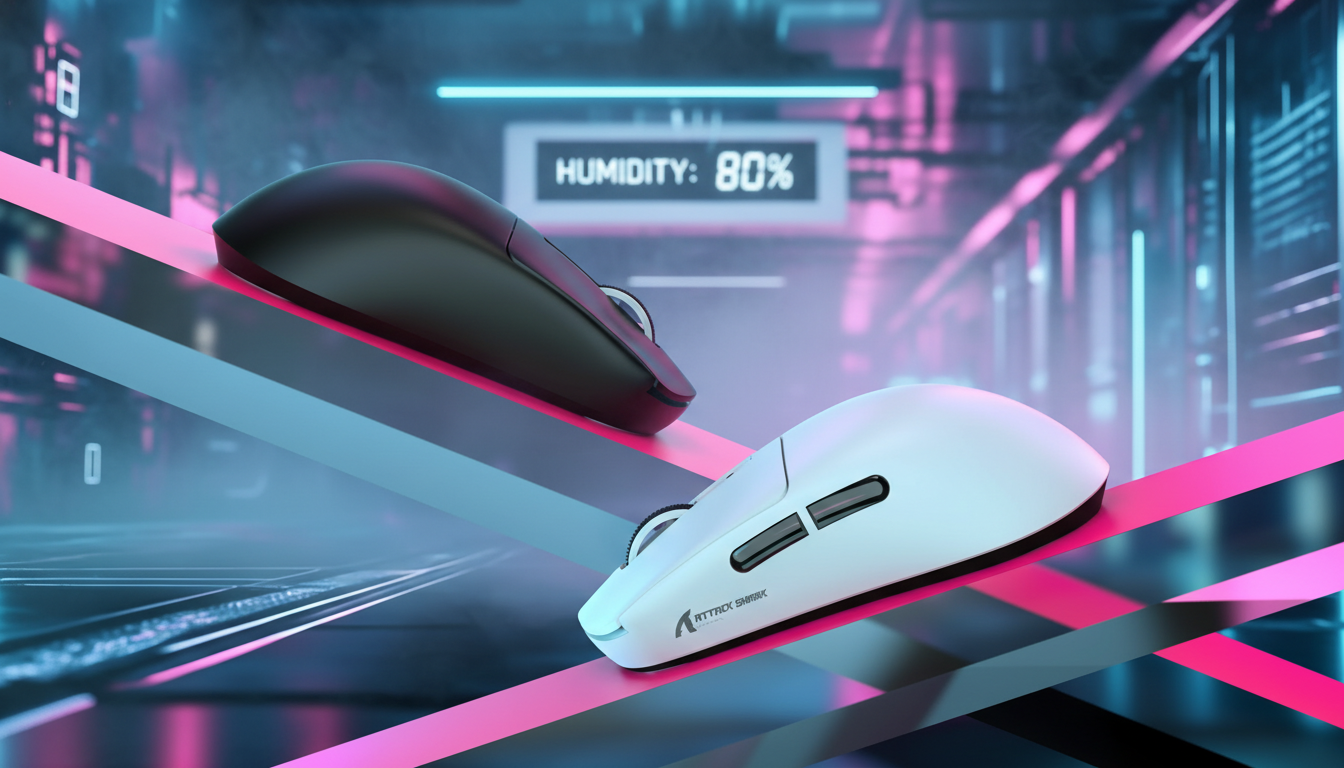
The quality of this coating is rarely specified in marketing, but it is the primary reason why some "non-waterproof" mice survive spills while others fail instantly. For users in high-humidity regions, this coating also prevents the oxidation of internal components.
The Dynamic Stress Gap: Why Ratings Fail
A critical limitation of the IP rating system is that it applies to the static enclosure. During a test, the mouse sits still while water is sprayed or dust is blown.
Gaming is a dynamic activity. Repetitive clicking, aggressive flicking, and the friction of the mouse against a surface like the ATTACK SHARK CM03 eSport Gaming Mouse Pad (Rainbow Coated) create mechanical stress. This stress can cause the shell to flex, momentarily opening gaps in the seals or causing silicone gaskets to shift. Over time, the "IP54" protection of a new mouse may degrade to something closer to IP32.
Vulnerability: The USB Port
The USB-C charging port is a direct conduit for liquid to reach the MCU. While some devices use sealed ports, many rely on the fit of the cable. Using a high-quality, stable connection like the ATTACK SHARK C06 Coiled Cable For Mouse can reduce wear on the port, but users should always ensure the port area is dry before charging to avoid electrical arcing.
Performance Modeling: 8K Polling and Environmental Heat
As gaming mice move toward 8000Hz (8K) polling rates, environmental factors like temperature become more significant. High polling rates increase the workload on the MCU and the radio, generating more internal heat.
Modeling Note: The 8K Gaming Scenario
In our scenario modeling for a competitive gamer using an 8000Hz setup, we examined the relationship between polling, latency, and power draw.
| Parameter | Value | Unit | Rationale |
|---|---|---|---|
| Polling Rate | 8000 | Hz | High-performance esports standard |
| Polling Interval | 0.125 | ms | Time = 1 / Frequency |
| Motion Sync Delay | ~0.06 | ms | 0.5 * Interval (Deterministic) |
| Total Current Draw | ~19 | mA | Based on Nordic nRF52840 SoC models |
| Estimated Runtime | ~22 | Hours | 500mAh Battery at 85% efficiency |
Methodology: This deterministic model assumes continuous heavy gaming load. Latency values are theoretical estimates based on USB HID standards and Nordic Semiconductor nRF52840 specifications.
For a mouse like the ATTACK SHARK X8 Series Tri-mode Lightweight Wireless Gaming Mouse, which supports 8K polling, the enclosure must balance protection with heat dissipation. A completely air-tight (IP68) seal can trap heat, potentially leading to thermal throttling of the MCU or reduced battery lifespan. This is why many high-performance mice opt for IP54—it provides sufficient protection while allowing for necessary thermal exchange.
Practical Selection Guide: Matching Gear to Environment
Choosing the right level of protection depends on your specific gaming environment and habits.
Scenario A: The Clean Room Competitor
If you play in a climate-controlled, dust-free room and never eat or drink at your desk, IP ratings are secondary to weight and sensor performance.
- Recommendation: Prioritize ultra-lightweight designs (under 60g) and high-polling sensors (PAW3950MAX).
- Focus: ATTACK SHARK X8 Series Tri-mode Lightweight Wireless Gaming Mouse.
Scenario B: The Shared Living Space / High-Humidity Zone
If you live in a humid climate, have pets, or occasionally have a drink at your desk, environmental protection is vital for longevity.
- Recommendation: Look for IP54-rated enclosures and mice with solid shells (no honeycomb holes) to prevent hair and dust from reaching the PCB.
- Focus: ATTACK SHARK G3 Tri-mode Wireless Gaming Mouse 25000 DPI Ultra Lightweight.
Maintenance Checklist for Durability
- Compressed Air: Use regularly to clear dust from the scroll wheel and button gaps before it reaches the switches.
- Surface Care: A water-resistant pad like the ATTACK SHARK CM03 eSport Gaming Mouse Pad (Rainbow Coated) prevents moisture from wicking into the bottom of the mouse.
- Visual Inspection: Periodically check the PTFE skates for embedded grit, which can scratch the sensor lens or the pad surface.
The Future of Peripheral Protection
As manufacturing techniques like nitrogen-cooled injection molding become more common, we expect to see more "no-hole" ultra-lightweight mice that offer high IP ratings without the weight penalty. Currently, the ATTACK SHARK G3 demonstrates this trend, weighing only 59g while maintaining a solid, durable shell.
Ultimately, an IP rating is a certification of an enclosure's integrity at a specific point in time. Real-world durability is a combination of that engineering foundation and the user's maintenance habits. By understanding these technical standards, gamers can make informed decisions that prioritize both peak performance and long-term hardware survival.
Disclaimer: This article is for informational purposes only. IP ratings are tested under specific laboratory conditions and do not guarantee protection against all liquids or environments. Always refer to the manufacturer's warranty and user manual for specific care instructions.


コメントを書く
このサイトはhCaptchaによって保護されており、hCaptchaプライバシーポリシーおよび利用規約が適用されます。