


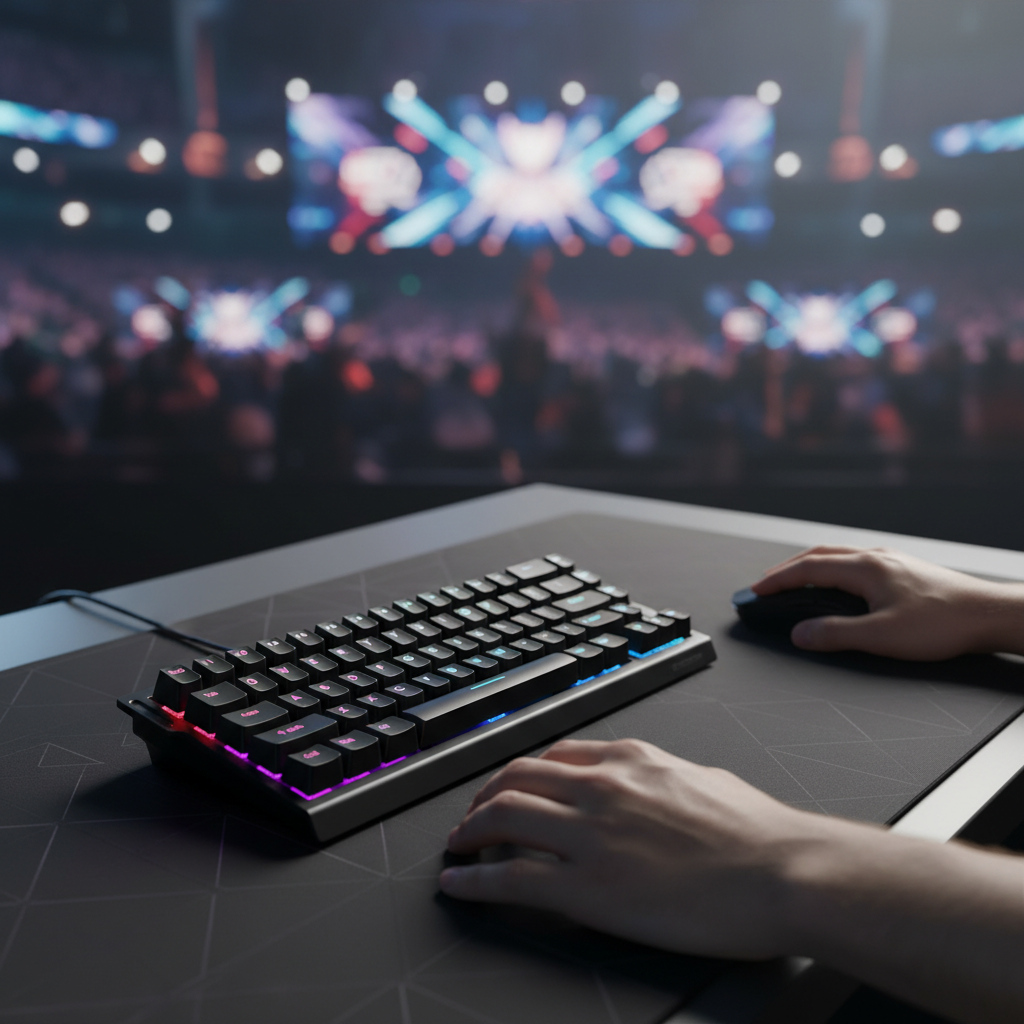
TL;DR: The Pro’s Compliance Checklist
For players entering high-stakes environments, hardware compliance is as critical as mechanical skill. Use this quick checklist to ensure your gear meets standard tournament expectations:
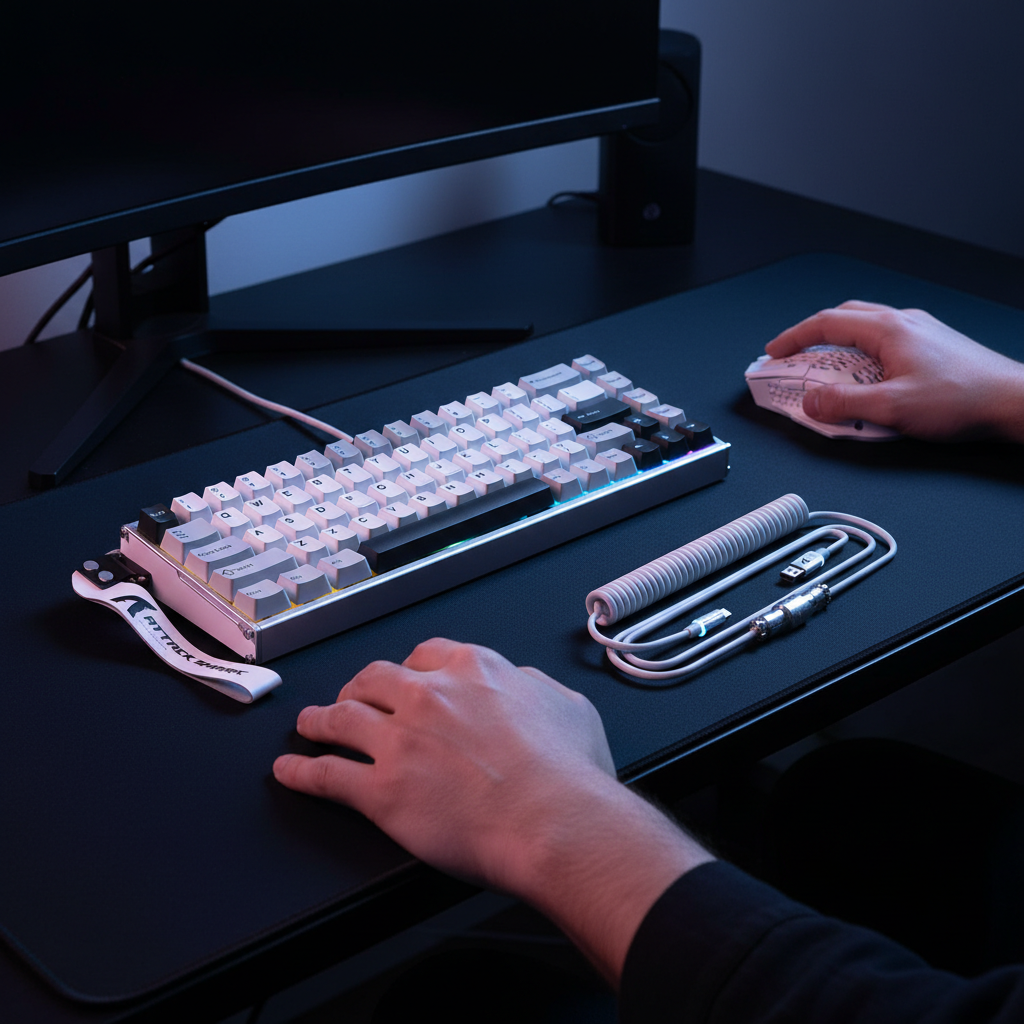
- Connectivity: Prioritize a wired connection. Even if your device is wireless, bring a high-quality shielded cable.
- Firmware: Perform a factory reset before the event to clear custom macros or SOCD (Snap Tap) profiles that may be prohibited.
- Rapid Trigger: Set a "stability floor" (e.g., 0.2mm) to prevent accidental inputs that could be flagged as automation.
- Verification: Use tools like Keyboard Inspector or HID Listen to confirm your device is reporting standard HID (Human Interface Device) packets without unauthorized secondary outputs.
- Backup: Always carry a "standard" mechanical keyboard with no advanced firmware features as a secondary fail-safe.
The Evolution of Hardware Compliance in Professional Esports
The transition from grassroots gaming to professional esports has transformed the keyboard from a simple input peripheral into a highly engineered performance tool. However, as hardware capabilities like Hall Effect sensors and 8000Hz polling rates become standard, tournament organizers (TOs) have introduced increasingly complex rulebooks to maintain competitive integrity. For the aspiring professional, "plug and play" has largely been replaced by "verify and comply."
Understanding the technical boundaries of hardware legality is now a prerequisite for professional play. In extreme cases, a player’s career can be significantly impacted by a firmware flag or an unapproved macro profile stored in on-board memory. This guide analyzes the current landscape of tournament regulations, focusing on the mechanisms of rapid trigger technology, connectivity requirements, and the specific hardware features that may trigger scrutiny in major leagues.

SOCD and the "Snap Tap" Controversy: Defining Input Priority
The most significant shift in recent tournament regulations involves Simultaneous Opposing Cardinal Directions (SOCD) processing. Traditionally, if a player pressed 'A' (left) and 'D' (right) simultaneously, the game engine would either cancel both inputs or prioritize the first one pressed. New firmware-level features, often marketed as "Snap Tap" or "SOCD Cleaning," allow the keyboard to prioritize the most recent input, which can enable highly consistent "counter-strafing" in first-person shooters.
The Technical Threshold of Legality
Major organizers, including Valve and ESL, have moved toward a restrictive stance on firmware-assisted movement. The core of the issue is whether the hardware is performing an action that should be reserved for human mechanical skill.
- Binary Input Rules: In many top-tier tournaments, hardware-level automation that modifies the game’s intended movement physics is prohibited.
- On-Board Memory Audits: Tournament officials may check the device's programmable memory. A common risk is assuming a feature is legal because it is "off by default." If the firmware contains the capability to enable prohibited SOCD cleaning without external software, it may be flagged during a hardware audit.
Logic Summary: Based on recent rule updates from major FPS league operators, we assume that input-side automation that eliminates the "null" zone between opposing directional keys is frequently viewed as a breach of mechanical skill requirements.
Rapid Trigger and Adjustable Actuation: The 0.2mm Heuristic
Magnetic Hall Effect switches have introduced "Rapid Trigger," where a key resets the instant it begins to move upward. While this technology is widely accepted in most professional circles, the sensitivity of these settings is often under scrutiny to ensure it does not cross into "automated" territory.
Precision Tuning vs. Rulebook Thresholds
Aspiring pros often push actuation points to the limit—sometimes as low as 0.1mm. However, rule interpretations can vary. Some grassroots tournaments allow adjustable actuation down to 0.1mm, while others may enforce a "safety buffer."
- The 0.2mm Heuristic: A common practical rule of thumb in semi-professional leagues is to set a minimum actuation floor of 0.2mm. This is generally considered a safe threshold to ensure input stability and avoid "jitter" that could be misinterpreted as a rapid-fire macro.
- Verification Method: To verify your Rapid Trigger behavior, you can use open-source tools like Keyboard Inspector. By recording a series of rapid presses, you can visualize the actuation and release points to ensure they correspond to your physical movement rather than a fixed-timer automation.
| Feature | Typical Tournament Status | Technical Constraint |
|---|---|---|
| Rapid Trigger | Generally Allowed | Must be reactive to physical travel (no timers). |
| Adjustable Actuation | Allowed | Recommended floor of 0.15mm–0.2mm for stability. |
| Multi-Actuation Macros | Strictly Banned | One physical press must equal one logical output. |
| Hardware-Level SOCD | Highly Restricted | Often requires a specific "Tournament Mode" firmware. |
Connectivity Standards: Why Wired Still Dominates the LAN
Despite the technical parity of modern wireless peripherals, the esports industry typically favors wired connections for high-stakes environments. This is a matter of environmental reliability and security.
The Interference Factor
At a major LAN event, the 2.4GHz spectrum is often saturated by broadcast equipment and thousands of mobile devices.
- Packet Loss Risk: The probability of signal interference is statistically higher in dense environments, which can lead to dropped inputs.
- Tournament Mandates: Events like the EVO Championship Series often maintain "Wired Only" rules to eliminate battery failure risks and prevent potential external signal manipulation.
8000Hz (8K) Polling: Theoretical vs. Real-World Math
For keyboards supporting 8000Hz polling rates, the technical benefits depend heavily on the host system.
- Theoretical Latency: An 8000Hz polling rate translates to a 0.125ms theoretical interval (1 / 8000 = 0.000125 seconds), assuming perfect USB bus efficiency.
- Motion Sync Scaling: At 1000Hz, Motion Sync typically adds approximately 0.5ms of latency. At 8000Hz, this delay is estimated to scale down to ~0.0625ms, which is virtually negligible for most players.
- CPU Bottlenecks: The primary bottleneck for 8K peripherals is Interrupt Request (IRQ) processing. Using an 8K keyboard on a system with a mid-range CPU can occasionally cause frame stutters, as the OS may struggle to schedule thousands of interrupts per second.
Anti-Cheat Compliance and the Risk of HWID Flags
A critical aspect of hardware legality is how keyboard firmware interacts with kernel-level anti-cheat systems like Riot’s Vanguard.
The Software Audit Requirement
According to patterns observed in professional play, players should ensure all key-remapping and macro software is completely removed from the system before competition.
- Firmware Flags: If a keyboard's firmware uses non-standard methods to achieve rapid-fire, it can trigger a Hardware ID (HWID) flag.
- Severe Consequences: An HWID ban is a potentially career-ending event for a professional, as it can permanently block a system from accessing the game. While appeals are sometimes possible, the process is difficult and often requires proving the hardware was misidentified.
Logistics and Regulatory Compliance for the Traveling Pro
For professionals traveling to international events, hardware must also comply with transport safety regulations.
Battery Safety and IATA Standards
If you use a tri-mode keyboard (2.4GHz, Bluetooth, Wired), it contains a lithium-ion battery.
- IATA 2025 Guidelines: According to the IATA Lithium Battery Guidance Document (2025), devices with integrated batteries must be protected from accidental activation during transport.
- The "Wired-Only" Backup: It is a professional best practice to carry a dedicated wired-only keyboard or ensure your wireless model has a physical "Off" switch for the battery to comply with airline and tournament safety checks.
Global Certification Marks
Tournament organizers may look for specific compliance marks to verify electronic safety:
- FCC/ISED (North America): Verifies radio frequency compliance.
- CE/RED (Europe): Adherence to the EU Radio Equipment Directive (RED).
- KC (South Korea): Essential for events in Korea, verifiable through the RRA Korea database.
Navigating the Gray Areas
The landscape of esports hardware rules is constantly evolving. While major leagues like the VCT have dedicated hardware auditors, many mid-tier events rely on community-driven standards.
When in doubt, prioritize mechanical skill over hardware assistance. The goal of technology like Hall Effect and 8K polling is to reduce the "friction" between your intent and the game's reaction—not to automate the gameplay. By choosing hardware that focuses on raw performance and transparency, you ensure your victories remain unquestionable in any arena.
Disclaimer: This article is for informational purposes only and does not constitute official legal advice or a guarantee of tournament eligibility. Tournament rules are subject to change at the discretion of the organizers. Always consult the specific rulebook of your event before competing.
Sources:

コメントを書く
このサイトはhCaptchaによって保護されており、hCaptchaプライバシーポリシーおよび利用規約が適用されます。