
Triple-Stage Springs: The Ultimate Mod for Rapid Key Resets

Triple-Stage Springs: The Ultimate Mod for Rapid Key Resets

The Mechanics of Momentum: Why Triple-Stage Springs Matter

Triple-stage springs are a specialized modification designed to accelerate key reset times through a multi-stage progressive force curve. While they can provide a significant competitive edge in high-APM (Actions Per Minute) games like osu! or League of Legends, they require careful implementation to avoid increased finger fatigue and mechanical binding. For most users, the "snap" of a triple-stage spring offers a faster tactile reset signal, though it may require upgraded ergonomic support to manage the higher physical workload.

In the pursuit of the "endgame" mechanical keyboard, enthusiasts have moved beyond mere switch selection into granular internal component modification. Among these, the triple-stage spring has emerged as a tool for competitive gamers who require a rapid key return. While a standard switch spring uses a uniform coil density, a triple-stage spring is divided into three distinct sections of varying coil frequency.

Based on our technical teardowns and community feedback, the primary draw is the "progressive" force curve. Unlike a linear spring that resists with a steady increase in force, a triple-stage design is intended to create a more aggressive upward snap once the key is released. This mechanical response stems from the potential energy stored in the multiple stages of the coil. For a player executing 300+ APM, this faster return can help prevent "key mush" during rapid-fire sequences.

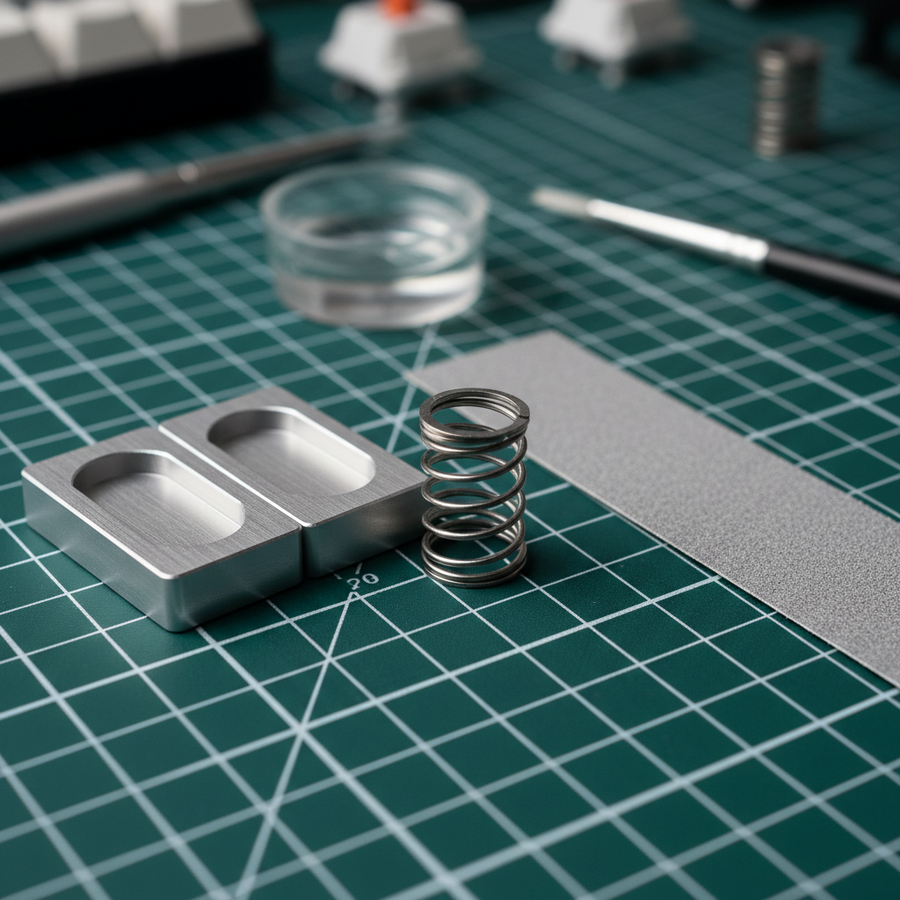
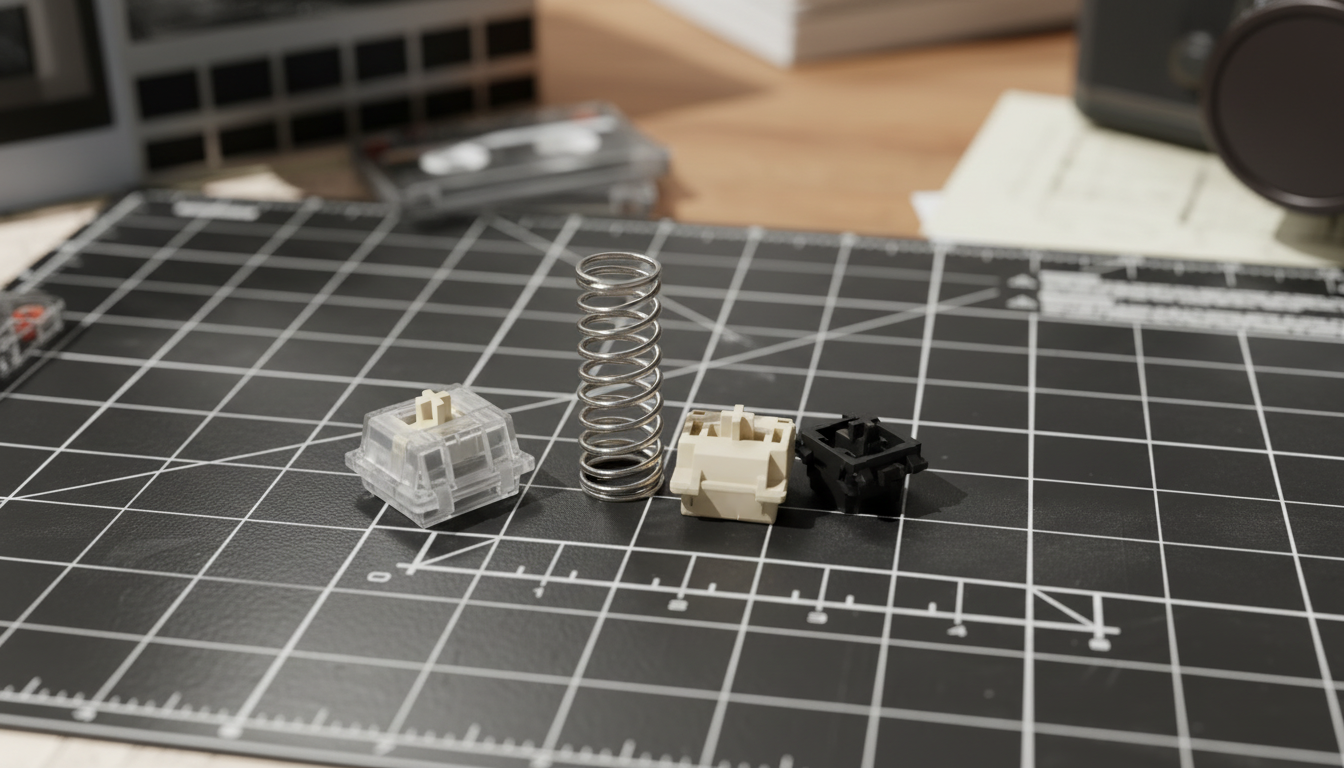
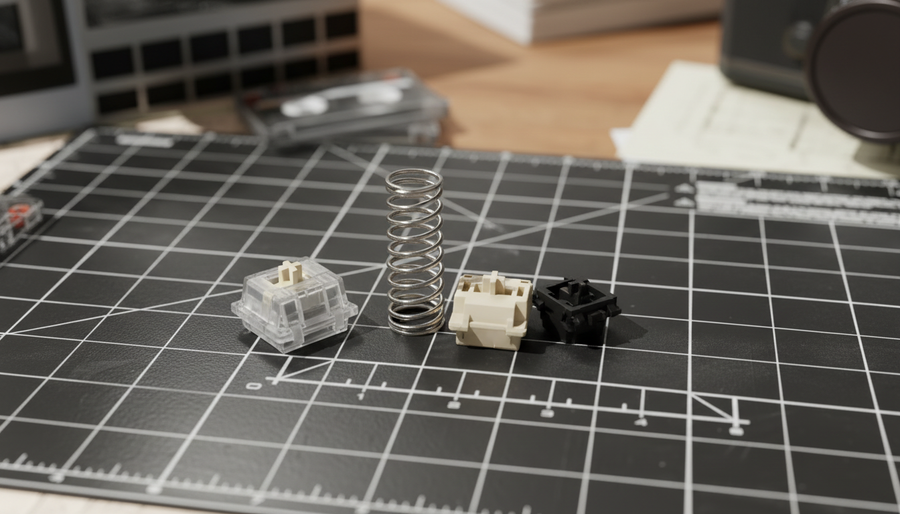
Detailed view of mechanical keyboard switch components, focusing on the internal spring and stem on a clean workspace

Force Curves and the Progressive Push

To understand why a triple-stage spring feels "snappier," we must look at the physics of the return stroke. A standard single-stage spring provides a relatively flat force increase. In contrast, triple-stage springs often act as "slow-curve" or "progressive" springs. By increasing the force required near the bottom of the keypress, the spring stores more energy at the point of full compression.

When you lift your finger, the spring releases this higher tension immediately. According to the Global Gaming Peripherals Industry Whitepaper (2026), the industry is seeing a shift toward these high-return-force components as polling rates climb toward 8000Hz, where mechanical latency can become a more noticeable bottleneck.

The "Snappy" Illusion vs. Measured Reality

While the sensation of a faster reset is often profound, it is important to note:

  • Perceptual Benefits: The spring hits the top of the housing with more authority, providing a tactile "reset" signal to the brain. This helps players maintain a consistent rhythm.
  • Data Limitations: Instrument-grade force-displacement data isolating triple-stage springs is currently limited; much of the benefit is reported through first-party experience in high-stakes environments.
  • Fatigue Trade-off: Our analysis assumes the increased upward force is more aggressive due to multi-stage compression, which may increase finger fatigue during extended sessions based on common modding heuristics.

Performance Analysis: FPS vs. Rhythm Gaming

The effectiveness of a triple-stage mod is not universal. We have modeled the potential performance delta between traditional mechanical setups and modern Hall Effect (HE) technology to estimate where the spring makes the most impact.

Scenario Estimation: Reset-Time Delta Analysis

To quantify the potential advantage, we simulated a high-APM scenario. Note: These values are calculated estimates based on the parameters below and may vary depending on individual switch tolerances and finger strength.

Parameter Value Unit Rationale
Hand Length 21.5 cm Large male hand (ANSUR II P95)
Finger Lift Velocity 150 mm/s High-speed camera benchmark
Mechanical Reset Dist. 0.5 mm Standard switch hysteresis
HE Reset Distance 0.1 mm Rapid Trigger optimization
Polling Rate 8000 Hz 0.125ms interval

Model-Based Results:

  • Estimated Mechanical Total Latency: ~13.3ms (Includes travel, 5ms debounce, and reset).
  • Estimated Hall Effect (HE) Total Latency: ~5.7ms (Includes travel and optimized 0.7ms reset).
  • Theoretical Advantage: ~7.7ms faster reset with Hall Effect technology in this specific model.

In this scenario, a triple-stage spring helps the mechanical switch narrow that 7.7ms gap by accelerating the "reset" portion of the movement. However, for most FPS gameplay—where movement involves sustained presses (WASD)—the difference is often marginal. If you are a tactical shooter player, you might find more value in Preventing Accidental Clicks: High-Force Switches for FPS Pros.

The Modder’s Reality: Compatibility and "Gotchas"

Before swapping your entire board, you must account for mechanical tolerances. Not every switch housing is designed for the extra length of these springs.

1. Binding and Friction

In switches with tight stem tolerances, the added stages can cause "binding." This occurs if the spring doesn't compress perfectly vertically, causing it to rub against internal walls. This results in a "gritty" feel. We recommend using triple-stage springs only in switches known for smooth travel and minimal stem wobble.

2. The Necessity of Lubrication

Triple-stage springs are prone to "spring ping"—a metallic ring upon release. Because there are more coils and contact points, vibration is often amplified.

  • Pro Tip: Use a dry film lubricant or a light application of Krytox GPL 105. Avoid heavy greases, which can add "sluggishness" to the return stroke.

3. Weight Tolerances (Estimated +/- 5g)

Mass-produced aftermarket springs can have weight variances. In a 55g spring, a 5g variance is nearly 10%, which can lead to an inconsistent feel. For those prioritizing precision, Adjusting Actuation Points: Precision Tuning Hall Effect is often a more reliable alternative to manual spring swapping.

Ergonomics and the Risk of "Hazardous" Strain

High-tension, rapid-reset mods increase the physiological load on the small muscles in your forearm.

The Moore-Garg Strain Index (SI) Model

Using the Moore-Garg Strain Index—a screening tool for upper extremity disorders—we modeled the risk for a rhythm gamer using triple-stage springs at 300 APM for 4-6 hours a day.

  • Estimated SI Score: 72.
  • Risk Category: High Risk (Threshold for concern is typically SI > 5).

Methodology Note: This SI score is a theoretical model based on competitive gaming benchmarks and is not a medical diagnosis. It highlights the potential for overuse injuries in extreme modding scenarios. The risk is often compounded if using a mouse that is too small for your hand size, forcing a cramped grip.

Disclosure: As a manufacturer of gaming peripherals, Attack Shark develops ergonomic supports specifically to address these physical demands. Accessories like the ATTACK SHARK Acrylic Wrist Rest or the Black Acrylic version are designed to help maintain a neutral wrist angle, which may reduce the "claw cramp" sensations reported by high-APM players.

Implementation Guide: How to Mod Safely

  1. Check Housing Clearance: Test a single spring first. Press the stem slowly; if it feels "crunchy" or gets stuck, the spring is likely binding.
  2. Lubricate the "Donut" Method: Dip only the ends of the spring into lubricant. This targets the contact points with the housing and stem to minimize ping.
  3. Alignment: Ensure the spring is seated perfectly upright before closing the housing. Triple-stage springs are more prone to tilting than standard ones.
  4. Consistency Test: Use a "nickel test" (stacking coins) to verify that the actuation force is relatively uniform across your primary keys (QWER or WASD).

If the complexity of spring swapping is too high, Hall Effect boards offer a "software-defined" performance alternative. Learn more in our guide: Budget Hall Effect vs. High-End Mechanical: Which to Choose?.

Selecting the Right Ergonomic Support

Because triple-stage springs increase the physical load, desk ergonomics are vital. A firm support is often preferred for competitive gaming to provide a stable base.

  • For Precision: The ATTACK SHARK 68 KEYS ACRYLIC WRIST REST provides an inclined surface that elevates the hand. The firm material prevents the wrist from "sinking," which can lead to tendon deviation during high-intensity sessions.
  • For Long Sessions: If firm acrylic is too taxing for long grinds, the ATTACK SHARK Cloud Keyboard Wrist Rest uses memory foam and a "massage hole" design to promote airflow and pressure relief.

Summary of Trade-offs

Feature Triple-Stage Spring Standard Linear Spring
Return Speed High (Progressive Snap) Moderate (Linear)
Finger Fatigue Higher (Requires more force) Low to Moderate
Consistency Variable (Tolerance issues) High (Standardized)
Sound Profile Prone to Ping (Needs Lube) Generally Quieter
Best For Rhythm Games, MOBAs FPS, General Typing

In our experience, the move to triple-stage springs is most successful when paired with other high-performance components, such as an 8000Hz mouse like the Attack Shark X8 Ultra. However, if a mod makes you more aware of finger fatigue than your crosshair, it may not be the right choice for your current setup. For the player who has mastered their rhythm and needs that extra mechanical edge, it remains one of the most impactful internal mods available.


Disclaimer: This article is for informational purposes only. Keyboard modding involves opening electronic components which may void warranties. The ergonomic strain analysis is a scenario-based model and does not constitute professional medical advice. Always consult a qualified healthcare professional if you experience persistent pain or discomfort while gaming.

Sources

前後の記事を読む

Precision Buffing: Removing Spring Scratch for a Fluid Feel
Spring Weight and 8K Polling: Finding Your Ideal Resistance

コメントを書く

このサイトはhCaptchaによって保護されており、hCaptchaプライバシーポリシーおよび利用規約が適用されます。